Identification
Commercial name: Essential Oil of Basil (Methyl chavicol type)
Botanical name: Ocimum basilicum L.
Origin: Vietnam
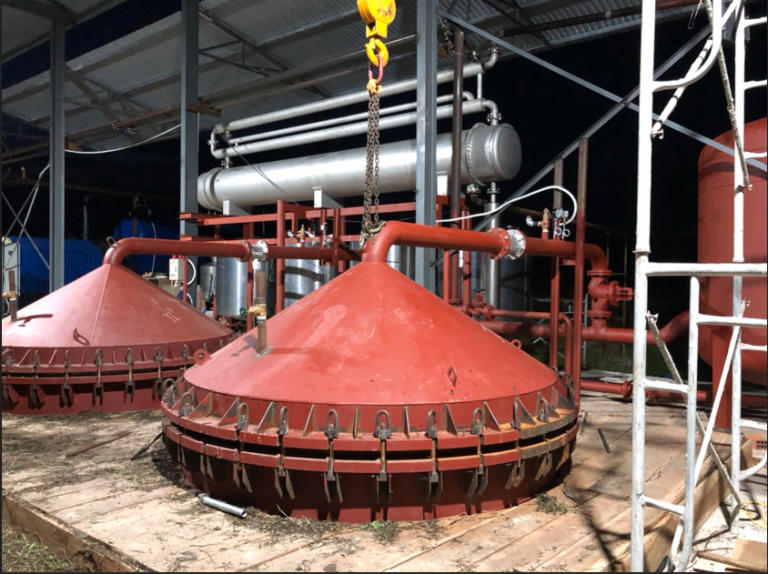
Processing method: Steam distillation of the leaves and flowering tops.
INCI name: Ocimum Basilicum Oil
CAS: 8015-73-4
EINECS-CAS: 84775-71-3
Specification
Odour: Characteristic, spicy, slightly aniseed.
Appearance: Pale yellow to amber liquid
Relative density (20°C): 0.920 to 0.983
Refractive index (20°C): 1.501 to 1.525
Optical rotation (20°C): -7° to 2°
Flash point: 75°C (closed cup)
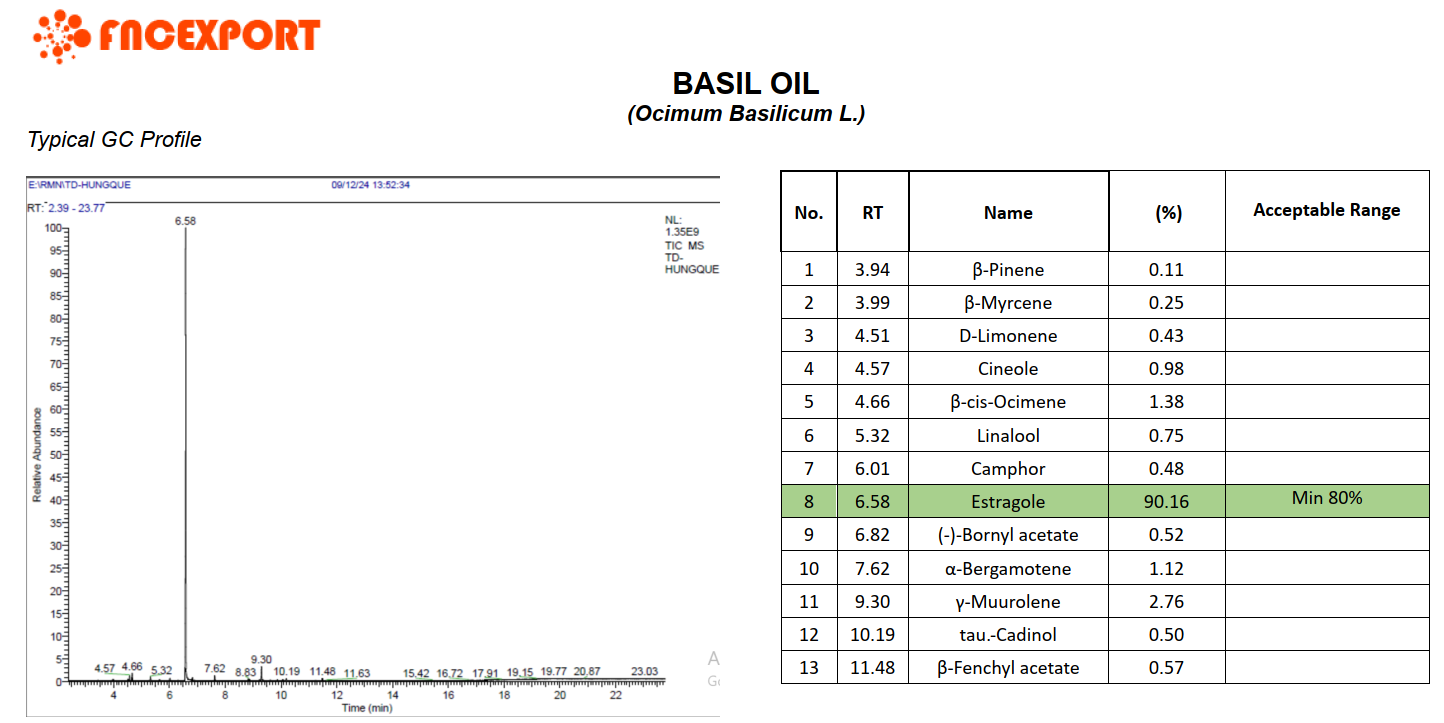
Methyl Chavicol: Min 80%
1.8-Cineole: 1% to 4%
Linalool: 0.5% to 3.5%
Trans-Beta-Ocimeme: 0% to 2%
Methyl Eugenol: 0.2% to 1%
Camphor: 0.1% to 1%
Plant material and cultivation details
Basil (Ocimum basilicum L.) is one of the species in the Lamiaceae family. The plant can grow up to 0.6 m in height, the leaves are green, the apex mostly acute or acuminate; the shape is ovate or elliptic ovate. The plant requires low maintenance, and it is easy to grow, flourishes under conditions of long daylight with full sun and well-drained soil.
The first harvest is obtained at 90 to 95 days of planting. Thereafter it may be harvested at every 45 days interval. The best time to harvest basil is during the full flowering stage. Farmers will make the cuts 5 mm above a node and at a height of 10 to 15 cm, and leave sufficient foliage on the plant to continue with healthy growth. The ideal time to harvest basil that has to be dried is on a sunny morning, immediately after the dew has evaporated, and before the day becomes too warm.
The average yield is 13-14 tonnes of fresh leaves and 3-4 tonnes of flowers can be obtained per ha. 4-5 crops can be harvested per year.
Traditional Uses
The plant is traditionally recognized for its utilization for both culinary and aromatherapy purposes.
Besides that basil is also well known for having a wide variety of medicinal properties: to treat flu, fever, colds, as well as issues pertaining to digestion, reproduction, and respiration.
GC Profile