
Identification
Essential Oil of Lemongrass
(Cymbopogon citratus)
Origin: VietNam
Processing method: Steam distillation of the leaves.
EINECS-CAS: 89998-14-1
EC: 289-752-0
Specification
Odour: Strong, lemony, herbaceous.
Appearance: yellow to brown yellow liquid.
Relative density (20°C): 0.870 to 0.910
Refractive index (20°C): 1.460 to 1.497
Optical rotation (20°C): -4° to +4°
Flash point: 71°C (closed cup)
Neral: 27% to 37%
Geranial: 35% to 45%
Total Citral: 65% to 85%
Myrcene: 6% to 15%
Geraniol: 2% to 10%
Geranyl Acetate: 0.5% to 6%
Plant material and cultivation details
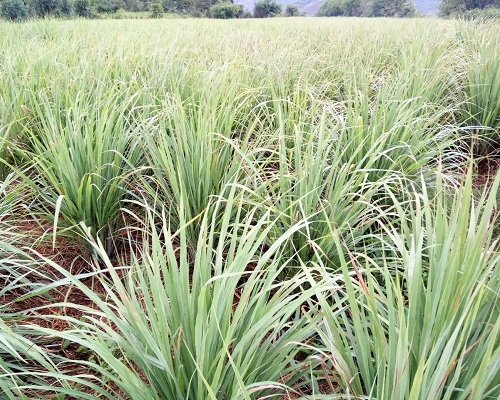
Lemongrass (Cymbopogon citratus) is an aromatic, evergreen, clump-forming, perennial grass producing numerous stiff stems arising from a short rhizomatous rootstock, and growing around 1.5 metres tall.
Lemongrass is widely planted in VietNam, harvesting is done by hand, almost whole leaves are cutted, only 6 inch from the ground is left. First harvest of leaves may start about 6-8 months after planting. Subsequently leaves can be cut 3-6 times per year during 4-6 years, the cutting cycle is generally maintained at 3-4 months to promote tillering and leaf yield.
The average annual herbage yield of lemongrass is 10 tons/ha, yielding 25-30 kg lemongrass oil (0.25-0.30%).
Traditional Uses
With its uplifting aroma, Lemongrass Essential Oil reduce stress related symptoms, uplift mood and help with mental clarity and concentration.
A citrus-herb scent that can be diffused to help purify the air from musky odors or applied topically for skin-cleansing benefits. It is also used as a flavouring in the food industry in soft drinks and various foods.
Due to it’s high content of citral and geraniol, lemongrass essential oil can work well to deter insects such as mosquitoes, ants and fleas.
Traditional VietNamese medicine has used Lemongrass Essential Oil to treat infectious illness and fever.