Identification

Commercial name: Tamanu Oil
Botanical name: Calophyllum inophyllum
Origin: Vietnam

Processing method: Cold pressed from the nut kernels.

INCI name: Calophyllum Inophyllum Seed Oil
CAS number: 68956-68-3

Specification

Odour: Very aromatic and characteristic, nutty
Appearance: Liquid at 20°C, yellow/green/brownish 

Flash point: >200°C

Oleic Acid: 37% to 48%
Linoleic Acid: 20% to 34%
Stearic Acid: 12% to 18%
Palmitic Acid: 7% to 16%

Linolenic Acid: 0% to 2%
Arachidic Acid: 0% to 2%
Myristic Acid: 0% to 1%
Gondoic Acid: 0% to 1%
Palmitoleic Acid: 0% to 1%

Plant material and cultivation details

Tamanu (Calophyllum inophyllum) is a slow-growing, medium-sized evergreen tree with a spreading crown; it usually grows up to 25 metres tall, occasionally to 35 metres. The bole is usually short and twisted or leaning; it can be up to 150cm in diameter. All parts of the plant contain a sticky yellowish latex. A multipurpose plant, it is harvested from the wild for local use as a food, medicine and source of materials.


Tamanu Oil is natural nut oil that is extracted from the nut kernels of the Tamanu Tree after the nut kernels have been left to cure over a 6-8 week period.

Traditional Uses

The oil from Tamanu Seed is widely required by most aromatherapists for its applicable benefits to cure colds and flu, motion sickness, morning sickness, rheumatism, coughs and circulation issues. It also helps to relieve muscular cramps, spasms, aches and ease rigidness in joints

Tamanu oil has cicatrizing properties, explaining its traditional and modern use in a wide range of skin problems. The oil has also shown anti-inflammatory, antifungal, antibacterial and insecticidal activity.

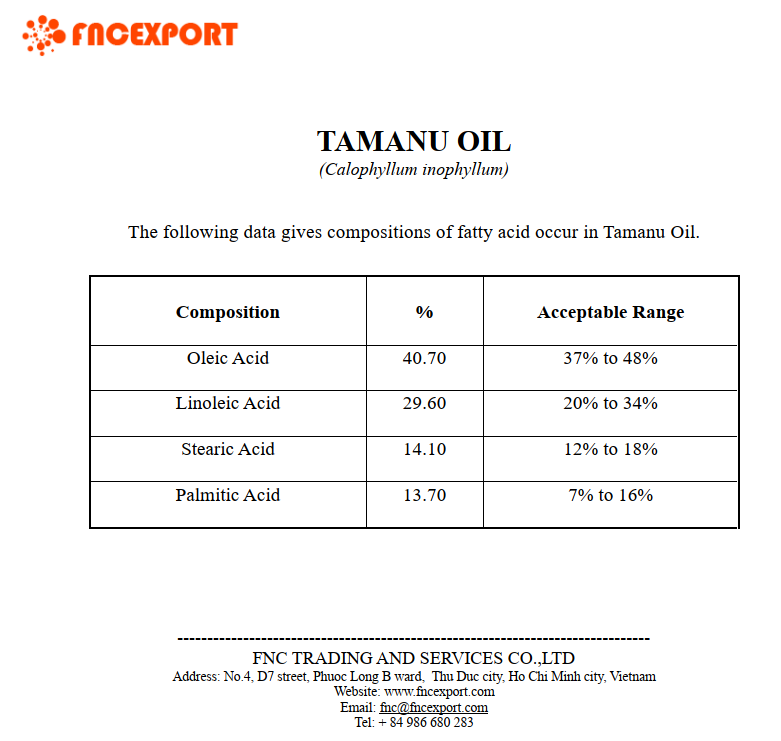
GC Test Report